 We are at the dawning of a new era in the use of antibiotics.
For some 20 years there have been attempts to use antibiotics in the treatment of Crohn’s disease. Although most trials have delivered mixed results, this direction has been reinforced by the association of Mycobacterium avium ssp paratuberculosis (MAP) with Crohn’s disease.
The main principle of judicious and effective antibiotic usage has been the targeting of the suspected pathogen with a therapy that is both specific and directed. This has been a difficult job, as there has been, up to now, no protocol that will ensure the reliable isolation of the pathogen from the patient. The model that is used for new compounds against MAP-associated organisms is directly related to the proven therapies for tuberculosis, and this has been a wise model to follow.
We are at the dawning of a new era in the use of antibiotics.
For some 20 years there have been attempts to use antibiotics in the treatment of Crohn’s disease. Although most trials have delivered mixed results, this direction has been reinforced by the association of Mycobacterium avium ssp paratuberculosis (MAP) with Crohn’s disease.
The main principle of judicious and effective antibiotic usage has been the targeting of the suspected pathogen with a therapy that is both specific and directed. This has been a difficult job, as there has been, up to now, no protocol that will ensure the reliable isolation of the pathogen from the patient. The model that is used for new compounds against MAP-associated organisms is directly related to the proven therapies for tuberculosis, and this has been a wise model to follow.
[button link=”http://thecrohnsinfection.org/john-aitken-antibiotics/” type=”big”] Read the Full Article[/button]

 I suppose everything is real to the cat. I was watching our cat sleeping the other night, and he suddenly started twitching in his sleep. He appeared to be dreaming. Maybe our cat can distinguish between the reality of waking life and the world of the dream. In all probability, he cannot grapple with abstract concepts. He probably doesn’t wonder at all about where the food on the plate came from prior to being placed in his bowl in the morning. For our cat, reality is very concrete.
For a Crohn’s disease patient, reality is far from concrete. The reason they have become ill is not yet understood by the medical profession, and there are any number of theories that can be presented to the patient to explain the age old question, “Why me?”
I suppose everything is real to the cat. I was watching our cat sleeping the other night, and he suddenly started twitching in his sleep. He appeared to be dreaming. Maybe our cat can distinguish between the reality of waking life and the world of the dream. In all probability, he cannot grapple with abstract concepts. He probably doesn’t wonder at all about where the food on the plate came from prior to being placed in his bowl in the morning. For our cat, reality is very concrete.
For a Crohn’s disease patient, reality is far from concrete. The reason they have become ill is not yet understood by the medical profession, and there are any number of theories that can be presented to the patient to explain the age old question, “Why me?” 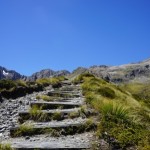 Internationally, New Zealand seems to be a desired destination. We have a thriving tourist industry, tempting tourists with a multitude of ways to place their lives in danger. Unfortunately, there is not the same attraction for career scientists, partly because of funding and partly because of remoteness from the centres of international research excellence. The adventurous spirit seems to be implanted in our genes. As a Boy Scout, I had frequent expeditions into the wilderness, usually in a small team of others near my age. I learned the value of working in a team to achieve a goal. Like in Boy Scouts, the most cost-effective way to advance in research is to form teams.
See how John Aitken’s exceptional team has been able to accomplish critical Crohn’s disease research despite encountering many obstacles.
Internationally, New Zealand seems to be a desired destination. We have a thriving tourist industry, tempting tourists with a multitude of ways to place their lives in danger. Unfortunately, there is not the same attraction for career scientists, partly because of funding and partly because of remoteness from the centres of international research excellence. The adventurous spirit seems to be implanted in our genes. As a Boy Scout, I had frequent expeditions into the wilderness, usually in a small team of others near my age. I learned the value of working in a team to achieve a goal. Like in Boy Scouts, the most cost-effective way to advance in research is to form teams.
See how John Aitken’s exceptional team has been able to accomplish critical Crohn’s disease research despite encountering many obstacles.